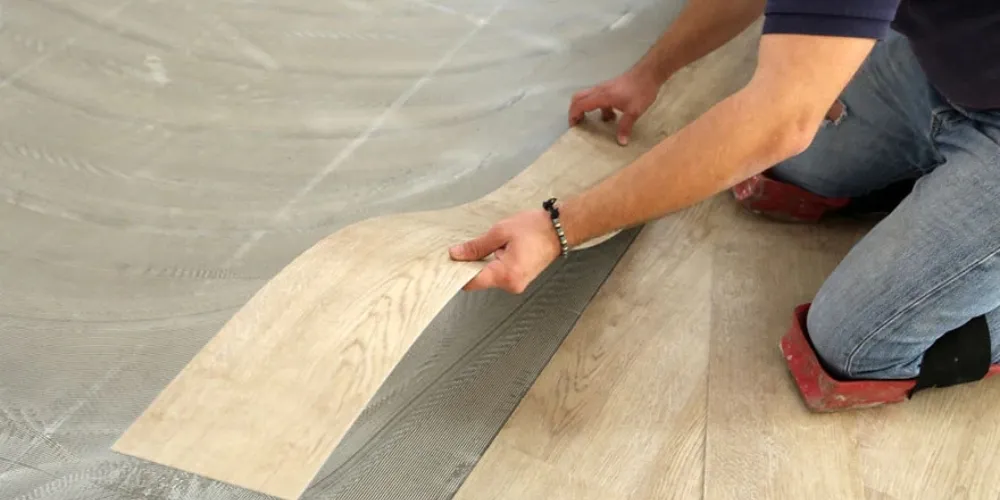
Staggering, according to its general definition, is the installation of non-uniformly cut vinyl planks that have random lengths. Ultimately, it creates a staggered pattern at the end joints of the Vinyl planks within adjacent rows. It is one of the most crucial factors to be taken care of in every project involving vinyl flooring. That’s because it not only has fundamental structural significance but also saves a lot of trouble later, which would otherwise be more likely.
Are you wondering about the steps on how to stagger vinyl plank flooring? The Pro Flooring Guide will provide you with all the necessary information you need to know to carry out a successful installation of your Vinyl Plank Flooring.
Steps to Stagger Vinyl Plank Flooring
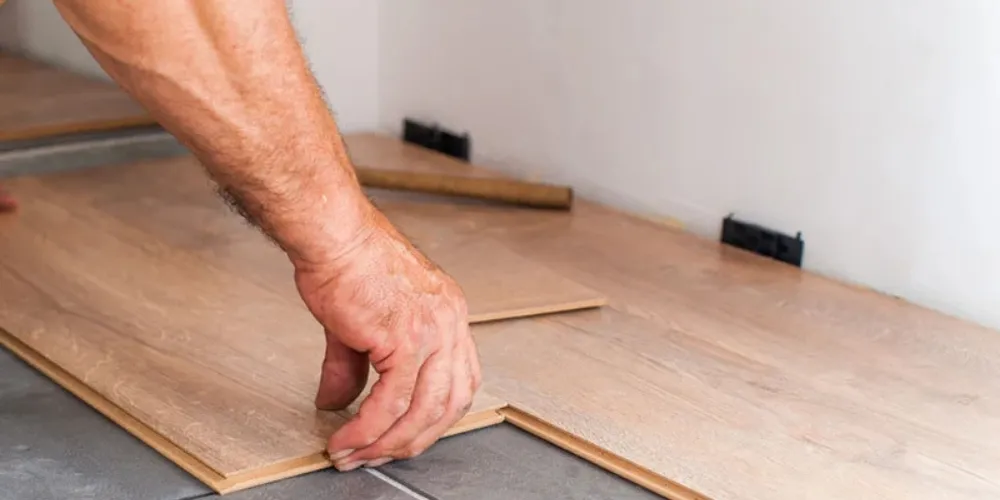
Below are the steps that help you to stagger the vinyl plank flooring efficiently.
Tools And Supplies
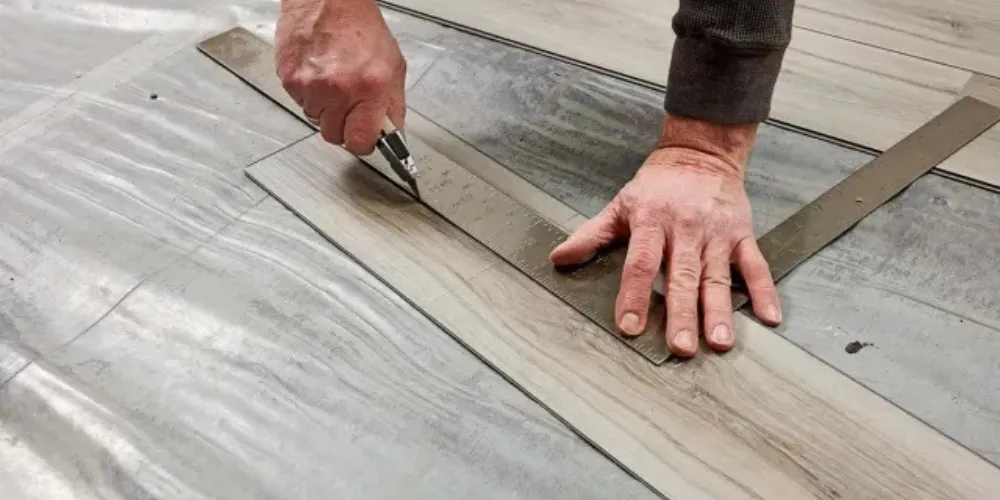
To stagger the vinyl planks, you will require safety gloves, spacers, a straight edge, measuring tape, replacement blades, and a utility knife.
Preparation Guide
Good prep always ensures maximum outcomes and is particularly crucial to deliver most of the time. And planning out Vinyl Plank Flooring Staggering isn’t an exception, either.
Let’s get to see what we’ve got to do beforehand.
Measure Your Space
To get the number of Vinyl Planks (full rows) required, you’ll need to start by measuring the room’s width, followed by dividing the obtained number by the planks’ width.
Calculation of the Width of the Last Row
Next up comes the calculation of the final row’s width. You’ll need to cut the planks in case the width is less than the normal plank’s width. The idea is to keep the same width for both the first and last rows of your Vinyl Planks, so the floor appears entirely symmetrical.
Unpacking and Mixing of Vinyl Floor
Unpack the planks and mix them from different packages to look for variations in colour, as the planks may come from distinct runs of flooring.
Read the Manufacturer’s Guidelines Carefully
Do not forget to thoroughly read the manufacturer’s guidelines, as each flooring type has different requirements and must be treated in a specific manner.
Use Spacers
Your chosen Vinyl Plank Flooring may also require spacers ¼ inch thick between the walls and the planks.
Step-By-Step Guide to Stagger Vinyl Plank Flooring
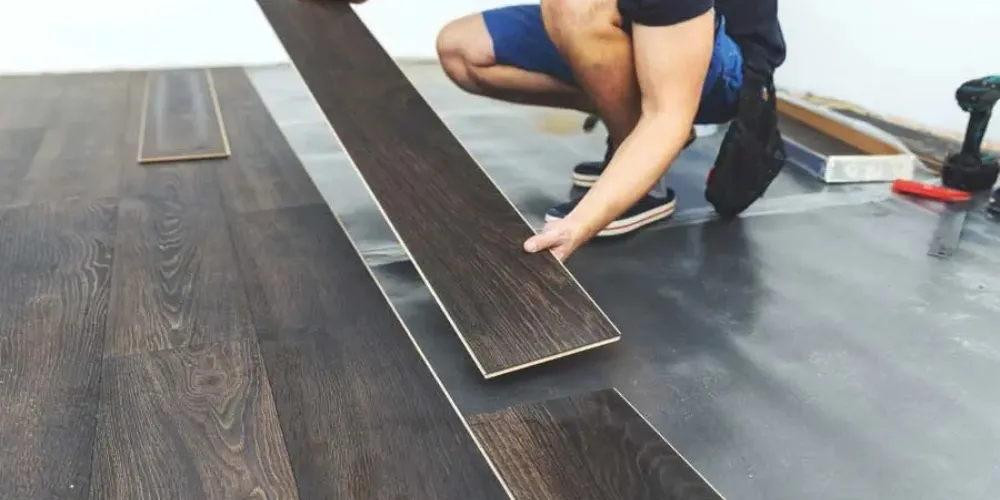
Staggering Vinyl Plank Flooring is never a critical or demanding job at all, until and unless you proceed with adequate preparation and, of course, patience.
1. Install the First Row of Vinyl Planks
Start by laying a full plank for the beginning of row one, after doing all the required calculations.
2. Cut the Planks
The plank at the end of the row should have a length of no less than 6 inches. And if the length is less than 6 inches, you’ll need to cut off from the row’s first plank, to have the last piece with a length of more than 6 inches.
3. Maintain the Proper Length of Each Plank
The length mentioned above is the minimum requirement for the structural strength of the flooring, so it needs to be achieved properly for every row.
4. Score and Snap the Second Row
Coming to row two, start scoring and snapping the first plank in half. There must be at least a difference of 6 to 8 inches between the end of the first plank and the seam closest to it within row one.
5. Cutting of Planks for Row 3
As for beginning row 3, you’ll have to start by cutting a plank with a full width similar to the ripped and trimmed piece present at the end of row one.
6. Repeat the Process
Repeat the steps mentioned above until row 3 is completed.
7. Laying of Row 4 & on
Take the cut-off plank from the end of row 2 and use it as a starting point for row 4. Repeat the steps mentioned above to complete this one, as well. Keep doing the same until the entire staggering of the Vinyl Flooring is complete.
You May Need To Know: Is Vinyl Plank Flooring Sturdy? How Long They Do Last?
Basic Concerns About Staggering Vinyl Plank Flooring
Now this, of course, is a new concept about Vinyl Plank Flooring installation to some degree, specifically if you’re new to its use. This has raised several concerns, such as, most obviously, the need for doing so and the potential consequences of not doing so.
Let’s begin our debate by learning about why doing so is so mandatory.
Do You Have To Stagger Vinyl Plank Flooring?
You certainly have to! That’s because
- Staggering your Vinyl Plank Flooring is how you guarantee a highly significant improvement in structural strength for your flooring and ultimately the most promising longevity.
- While vinyl flooring is definitely a sturdy floor treatment on its own, staggering it can serve as icing on the cake, making it last significantly longer and allowing you to benefit from it more than you normally would.
- Staggered vinyl Flooring is an incredible way to enhance its overall aesthetics and achieve the most adorable-looking decor outcomes.
- Staggering Vinyl Flooring diminishes the potential likelihood of plank warping, separating, or bowing.
- Staggering, as a matter of fact, is to benefit from the minimum spacing around (playing with it or taking advantage of it, whatever you wanna call it!) and haphazardly placing the Vinyl Planks, preferably as much as possible.
Therefore, it all comes down to the fact that staggering Vinyl Plank Flooring will bring about the best of it, and that’s how you can enjoy a sturdy, long-lasting, and visually pleasing functionality from it.
What If You Don’t Stagger Vinyl Plank?
You’re simply risking its alignment, working, and most importantly, durability in the first place. And in case you don’t consider staggering your Vinyl Plank Flooring:
- You’re most likely to end up with perpendicularly running lines to the direction of the floor. In other words, there will be unpleasant-looking, distracting lines running across the floor.
- Not staggering Vinyl Plank Flooring leads to the creation of weird-looking joint patterns in the entire flooring.
- When Vinyl Planks aren’t staggered, they don’t remain intact, and there is a huge possibility of gaps starting to appear all around.
- Not maintaining a random pattern of laying Vinyl Plank Flooring will give off the nasty impression of an amateur installation, which is a total waste of both time and money.
And now that we’ve got enough convincing about “Do you have to stagger Vinyl Plank Flooring” or not, it’s high time that we jump to planning out Vinyl Plank Flooring Staggering and not indulge in any misconduct regarding the installation. So, setback, and we’re about to nail our Vinyl Plank Flooring Installation.
See Also: How To Repair Vinyl Flooring Scratches
Some Additional Tips To Consider
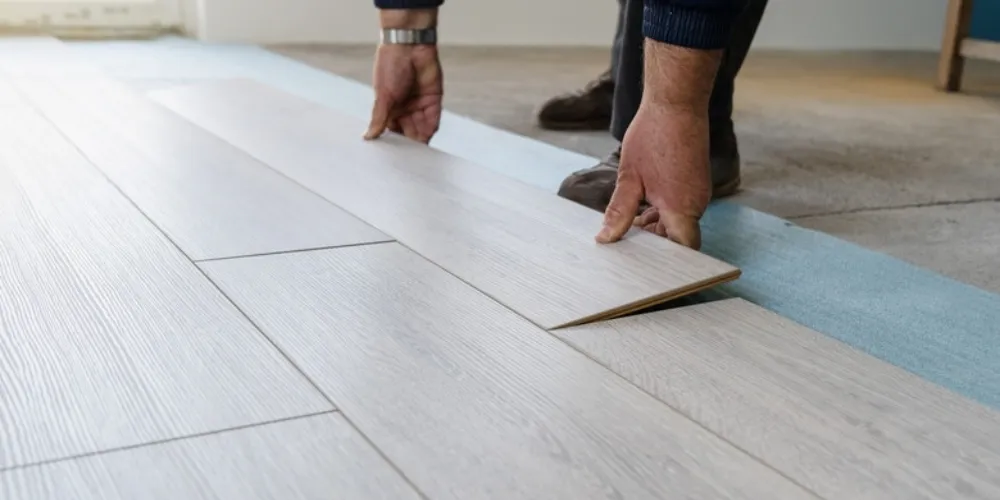
Take these few aspects into account while you figure out a planning layout for how to stagger Vinyl Plank Flooring:
- Replace the blade of your utility knife as soon as it starts to feel dull, as working with a dulled blade makes jagged edges on the Vinyl Planks.
- The minimum distance between two adjacent row seams must be at least 6 inches (for planks having a width of 5 inches). Similarly, the distance can be increased up to 8 to 10 inches when dealing with planks that are wider than 5 inches.
- When staggering Vinyl Plank Flooring, ensure that there is no more than a 10-inch difference within two adjacent seams, even for the planks wider than 5 inches, as this is the most likely to give rise to H-joints.
- Use cut-off planks to begin every row, as this will help prevent the Lightning or “Step” problem.
- If there are no cutoffs left, examine the previously completed two rows, then cut the first plank of the next row. This is to avoid unnecessarily close contact with the seams.
- Avoid lining up the first-row seams to the third-row seams, as this will create an “H-joint”, which is also known as the “H” problem, which can compromise a completely natural and attractive profile of your Vinyl Plank Flooring.
Common Mistakes to Avoid When Staggering Vinyl Planks
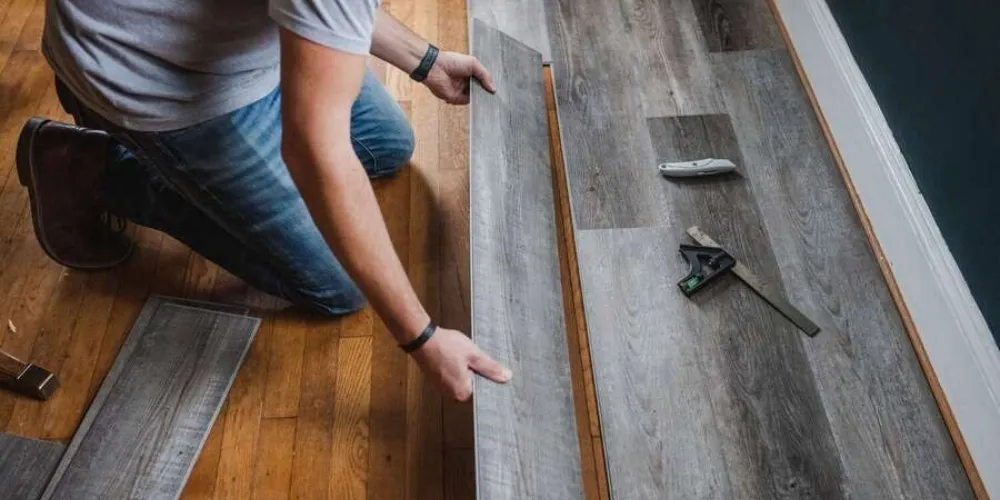
Avoid the following common mistakes when staggering the vinyl plank floor. This will help you to stagger your flooring planks like a professional.
- Not Staggering Seams Properly
- Starting Each Row With Full Planks Only
- Ignoring the Expansion Gaps
- Forgetting to Mix Planks From Different Boxes
- Cutting Planks Without Measuring Twice
- Not Locking Planks Properly
- Overusing Small Cut-off Pieces
- Rushing Through the First Row
- Neglecting to Clean the Subfloor
- Skipping Final Adjustments Like Baseboards and Trims
Conclusion
Staggering significantly contributes to creating a seamless and eye-catching look rather than the traditional floor appearance. It is a streamlined process; however, proper attention is required to achieve a successful staggered vinyl plank floor. We have provided valuable information and guidelines to help you throughout the process.
FAQs | Frequently Asked Questions
Should Luxury Vinyl Plank Flooring Be Staggered?
Staggering LVP is the best way to ensure amazing aesthetics and infinite durability. That’s because staggered LVP floors are significantly more durable than the regular ones and also have a better tendency to withstand wear and tear. It not only appears much more attractive than the non-staggered one but also offers better protection against floor lifting. The same applies to waterproofing, as well. Lastly, it is worth noting that staggered LVP is also too convenient to remove.
Do You Need A Moisture Barrier For Vinyl Plank Flooring?
The quality of your Vinyl Planks, the type of subfloor, and the kind of underlayment being used are the key factors that decide the need for a moisture barrier. If you’re using high-quality Vinyl boards, then you don’t really need to invest in a waterproof underlayment, as such boards already contain it. Similarly, you’ll need a moisture barrier if you’ve concrete subfloors, as they are prone to condensation; therefore, a moisture barrier is a crucial requirement. In the case of any other type of subfloor, you won’t need a moisture barrier.
Which Way Do You Lay Vinyl Planks?
Vinyl Planks should run in an alongside manner with the longest wall of the room. This kind of installation not only makes the room appear significantly more spacious, but also reduces the need for cutting vinyl planks in this way. Additionally, such alignment tends to be more durable and can withstand greater wear and tear, as well. However, if you still prefer an alternative and more attractive LVP installation, then you should go for laying the Vinyl Planks along the shortest wall of the room. While there is no essential hard and fast rule for laying Vinyl Plank, installing it alongside the longest wall is preferable.
What Happens If The Luxury Vinyl Plank Flooring Is Not Staggered?
If you do not stagger your Vinyl Plank Flooring, the end joints of the planks will be lined up and eventually lift from their placements, due to a large weak spot forming along the edges. This lifting might not always show up very soon and can take up to months to appear clear enough to be noticed. And in the worst-case scenarios, the flooring is likely to lift the moment any furniture is put on it. All situations ultimately require the flooring to be removed and then reinstalled, which, of course, will consume even more time and money.
How Far Apart Should The Seams Be On Vinyl Plank Flooring?
According to the thumb rule, there should be a minimum distance of 6 inches between two adjacent row seams, considering that the planks feature a width of 5 inches. For the planks with a width of more than 5 inches, the distance between the two adjacent row seams should be increased to 8 to 10 inches. Besides, if you go for a distance of more than 10 inches, things are likely to become difficult for you, since the H-joints will be hard to avoid in this way. Additionally, you may also need to adjust the blade of your utility knife during the procedure.
Does Vinyl Plank Flooring Go Down Randomly Or In A Pattern?
To avoid the formation of step patterns as well as H-joints, it’s always best to lay Vinyl Plank Flooring absolutely randomly, as much as possible. That’s because a random laying of the Vinyl Plank Flooring makes it easy to accomplish the staggering or stacking and doesn’t lead to any major troubles later, as well. The formation of step patterns or H joints is the most common concern of installing Vinyl Planks, and therefore, it’s best to avoid generating them beforehand.