Carpets are a crucial interior element for every residential and commercial place. They are used to cover the floors and improve the aesthetics of your space.
Now, when you’re up for a carpeting project in any of your desired spaces, it all comes down to the popular and legitimate concern of “How do I know how much carpet I need?”Most homeowners do not consider measuring their spaces accurately, which leads to buying the wrong amount of carpet, increases their expenses, and delays their project.
This blog post is all about how to measure a room for carpet like a pro. So read it very carefully from start to end.
Tools You’ll Need:
Before you start the measuring process, gather the tools needed, which include:
- Measuring tape
- Pen or Pencil
- Notepad or measurement app
- Calculator
- Graph paper (optional)
- Laser measurer (optional but helpful)
Step-by-Step Guide to Measuring a Room for Carpet
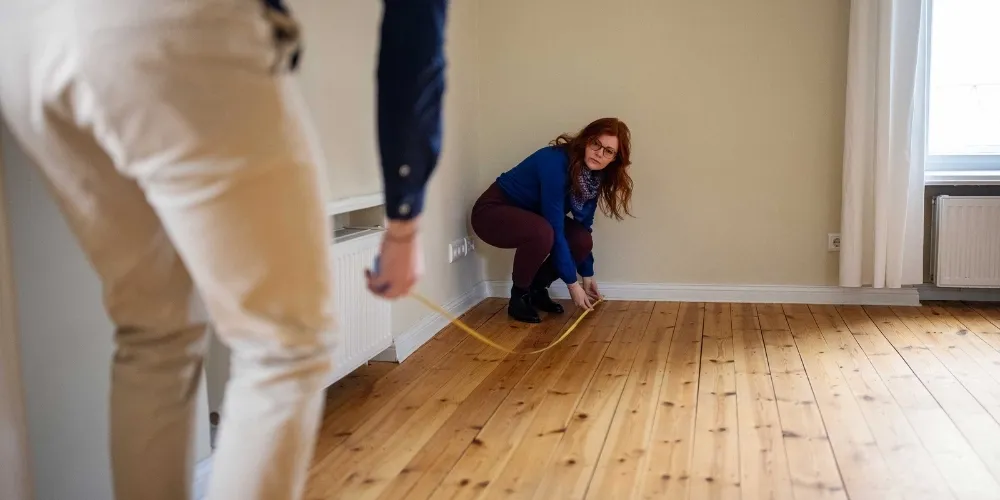
If you are a DIY’er and it’s your first time measuring the space, then this useful guideline will help you throughout the process. Follow each step for better results:
1. Start With the Longest Wall
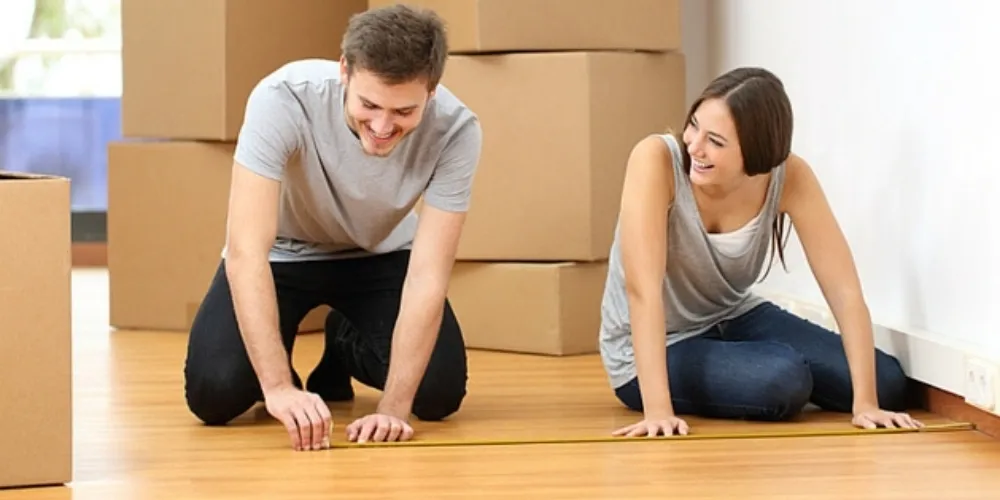
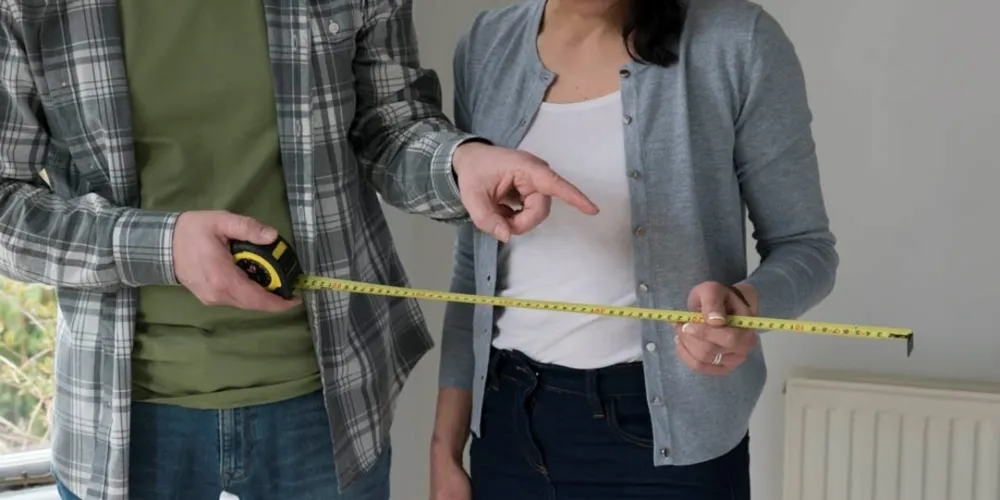
Use a measuring tape or ruler and start measuring the longest wall of your room. Extend your tape from one wall to another and note down the measurements on the notepad or measurement app. It is advisable to keep the tape straight for better results. It would be great if you got someone to hold your tape from one wall.
2. Measure the Width
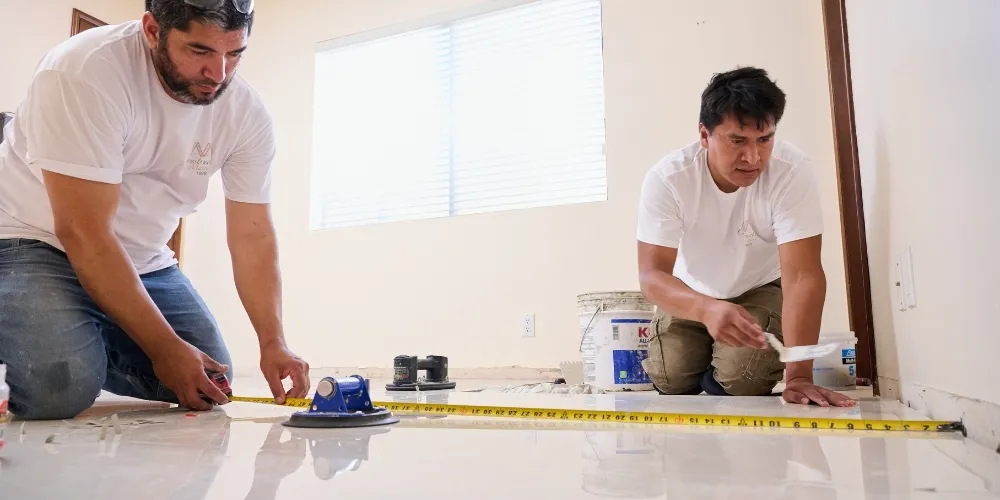
After measuring the longest points of walls, it’s time to account for the widest points. By using the measuring tape, measure the widths from different spots, even if your room is square-shaped. Further, measure the widths from various angles, as some old houses have uneven rooms.
3. Break the Room into Sections

If your room is uneven or irregularly shaped, it is better to break it into rectangular or triangular sections for accurate measurements. For instance, if your room is L-shaped, split it into two sections and measure the length and width of each section. For the triangular part of your room, try to measure the maximum length and width. For calculating your alcoves or curved corners, draw a straight line from one side of the wall to the other side. Then, record the perpendicular distance from the top of the curve to the front edge of the straight line.
4. Measure Doorways, Closets, and Other Add-Ons

Also, calculate the lengths and widths of doorways, closets, hallways, or other recesses.
Hallways
- The hallway area has the longest measurement along its length and the shortest along its width.
- If there is another hallway in contact with the first one at an angle of 90°, you’ll need to have an opposite (to the first one) measurement approach to proceed consistently from one end of your place to the other.
Closets
- Carpet measurement within rooms with wardrobes or closets requires accounting for the floor area within the wardrobe or closet; a separate piece of carpeting material is needed to cover that area.
- Take the measurements of the room’s length and width as you normally would, then repeat the procedure on the inside of the closet to obtain the overall carpet required.
Middle Of Doorways
- Measuring the middle of the doorways requires adding 2 to 3 inches to the overall square footage measurement.
- If there are two doorways in a room, the overall dimension must be increased by up to 6 inches.
Recesses And Chimneys
- If there are any chimney breasts or recesses present, then you’ll still need to measure the entire room, as if those hurdles weren’t there.
- As for the space occupied by such objects, the carpet needs to be cut from those specific parts at the time of carpet installation.
5. Add Waste Allowance
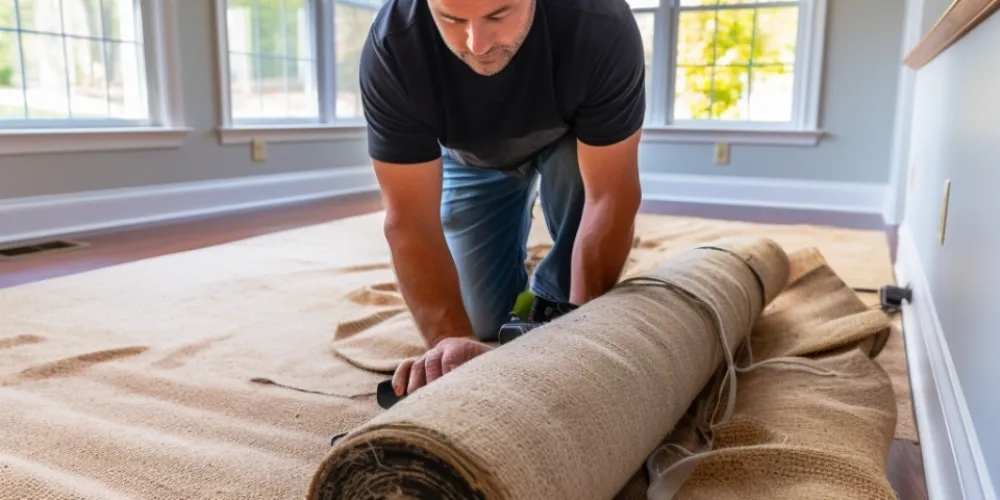
Getting an extra amount of carpet flooring is one of the thumb rules of carpet purchase, highly recommended by the experts, and there are multiple reasons for doing so:
- The wastage of stuff (often due to the width of the carpet roll)
- Trouble in matching the pattern of the carpet
- Maintaining the carpet seam
- Material wastage due to misconduct
Adding waste allowance will help trim and achieve a perfect fit of carpet tiles. Therefore, add 10% extra, 5-10cm on both lengths and widths to get the exact amount of material. If you are opting for the patterned carpeting, ask the suppliers about the design repeats. These pattern repeats also impact the overall measurements.
6. Calculate the Total Square Footage
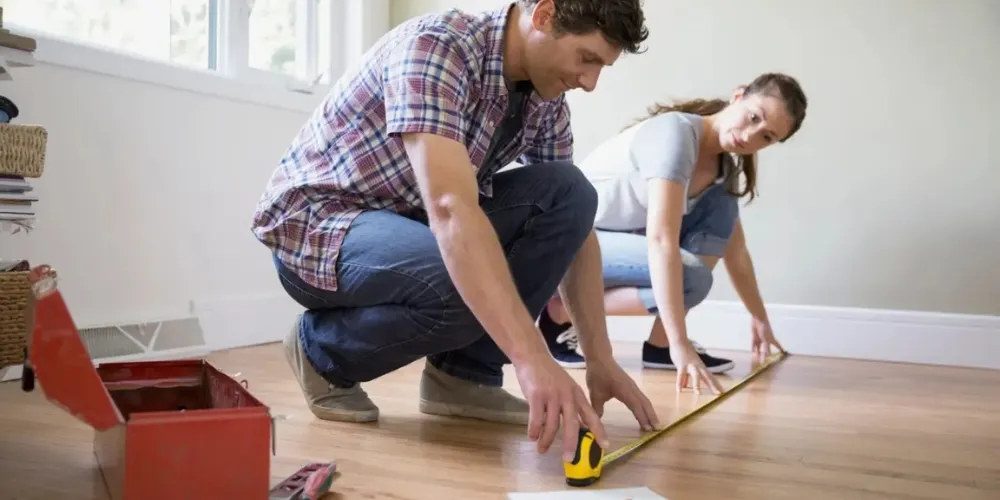
After measuring your space from all angles, it’s time to get its total square footage. To calculate the square footage, multiply the length by the width of your room. This will give you the square footage in square meters (m2). For example, if your room is 6 meters long and 5 meters wide, then the total square footage is 30m².
6m( length) X 5m( width)= 30m².
Similarly, if you plan to buy the carpet for multiple parts of your space, such as hallways, living rooms, etc. Then, multiply the square footage of each portion and get the total square footage of your entire living space.
Measuring Stairs (If Applicable)
Stair carpet installation can be tricky because they are never the same size. Start by measuring the height and depth of each step, then add them together to get the length. Next, measure the width of your stairs. Multiply the two figures obtained, i.e., the length (gained from the depth and height of each step) and the width of the stairs. The resulting figure will be the area of each step of your staircase. Multiply the area of each step by the total number of steps in your staircase, and you’ll know how much carpet to order/buy.
Pro Tips For Accurate Measurements
To get the accurate measurements of your room for carpet installation, consider the following pro tips:
- Measure twice: Once you have completed all the calculations, measure your space again to avoid any measurement error.
- Draw a quick sketch with numbers: After measuring the total square footage of your room, sketch it. This will help you to get a better idea of how much material is needed for each section of your space.
- Use a laser measurer for large rooms: For your larger rooms, it is better to use a laser measure instead of a simple measuring tape. The laser measurer not only provides precision but can also calculate your space in seconds.
- When to get a professional measurement: If your room has an uneven or irregular surface, an L-shaped room or alcove, and the subfloor is moist or damaged, then you’ll need the professional measurements. Additionally, the professional can better account for the seams or the patterned carpets.
Conclusion
Carpeting is an excellent way to upgrade the floor and overall ambience of your space. However, buying the right-sized carpet is challenging. With accurate measurements, you can get the carpet that exactly fits your space. Space measurement is not a difficult task; you can easily do it yourself by following the guidelines mentioned. But if you are not sure about your measurements, you can seek professional help.
FAQs | Frequently Asked Questions
How To Measure An Odd-Shaped Room?
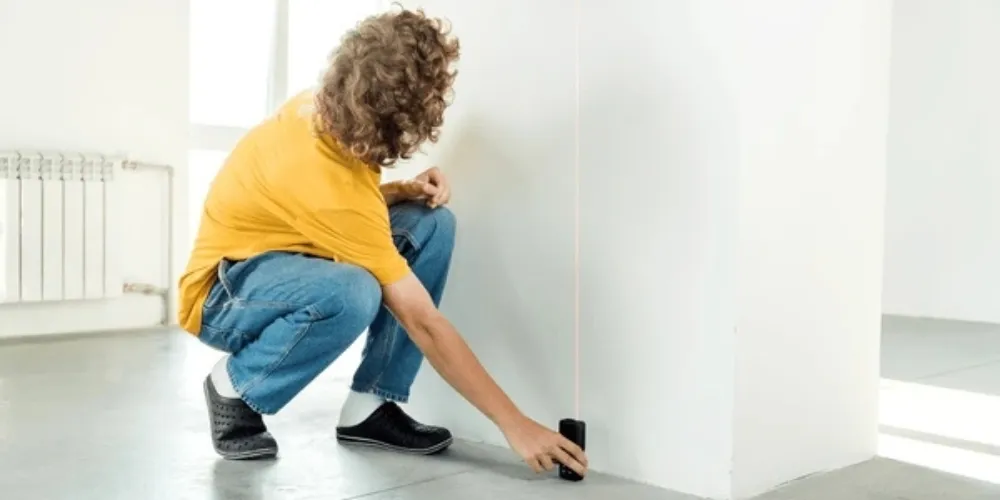
To find the square footage of a rather odd-shaped room or space, you’ll need to divide the area into even shapes, such as rectangles or squares, in other words, those that are easy to calculate. After that, you can easily measure all of the shapes by multiplying their lengths by the widths, eventually coming up with the resultant figure, i.e., the square footage of the entire space. And then, you can conveniently proceed with your carpet purchase.
What To Use For Cutting Carpets?
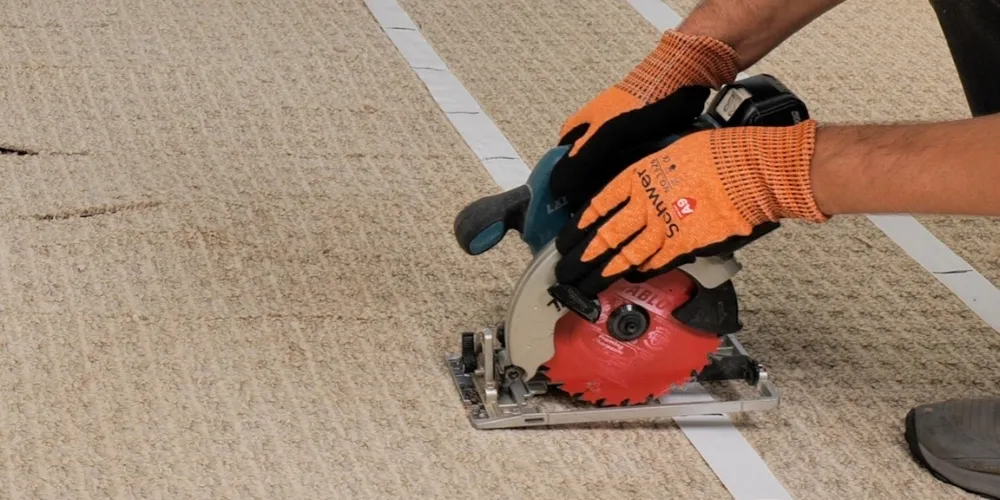
A sharp utility knife is the easiest-to-use and most practical tool when it comes to cutting carpets in a neat and flawless way. And you don’t really need to acquire (spend on) any particular tools or master cutting techniques, since the knife meant for everyday users can easily do the job for you, and you also don’t have to learn how to use it. In addition to that, you can also make use of a razor or an X-acto knife for the purpose.
How To Calculate The Size Of A Room?
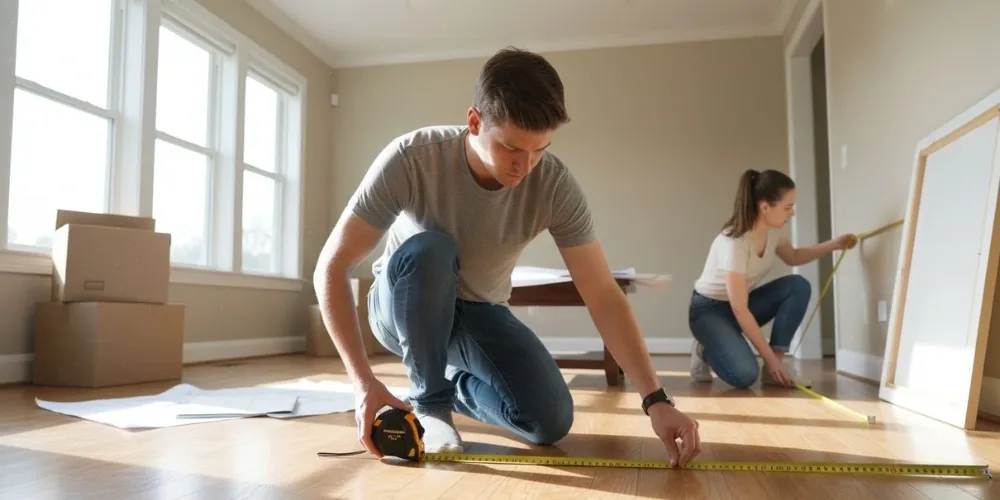
Start by obtaining both the length and width measurements of the room in order to calculate the square footage. Once you’ve got the measurements, you’ll need to multiply the length by the width, and the resultant figure will be the total square footage of your intended room or space. For instance, if you’ve got a 15-foot-long and 10-foot-wide room, then the total square footage will be 150 square feet.
How to Measure a Stair Carpet?
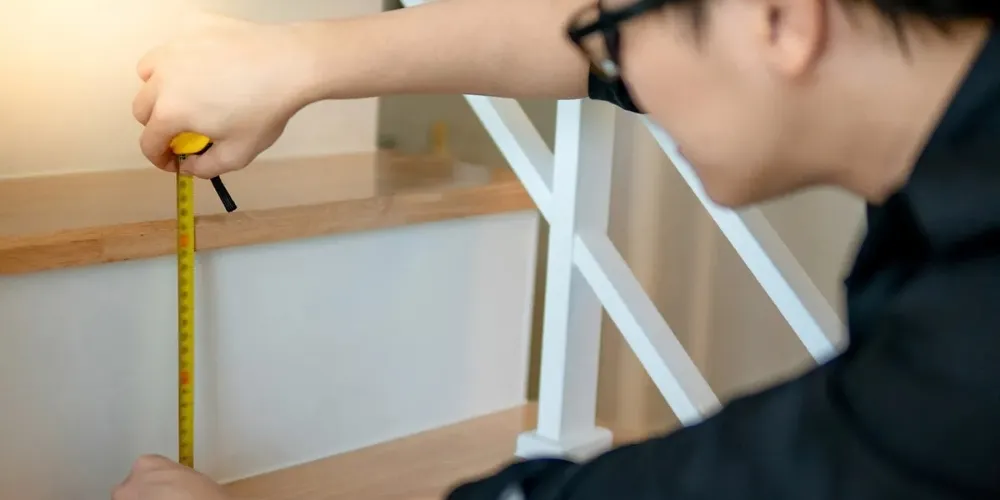
Measuring stairs for carpeting is, in fact, pretty similar to the way in which the square footage of a room is calculated. When it comes to stairs, the height and depth of each step will give you the length, which you’ll later need to multiply by the width, thus eventually obtaining the area of each step of your staircase. Another important tip to keep in mind is to consider an addition of up to 10%, for the wastage as well as for any measurement error, since stairs never measure the same, and there always lies a slight difference between each other.
Is Carpet Measured In Meters?
Carpets generally are either measured in Square Meters or Linear Meters, in order to ensure the fact that the carpeting is done in a like-for-like manner. Another important and associated factor to know at this point is the pricing of a carpet within Linear Meters as compared to in Square Meters, since the former is a greater unit. Therefore, by obtaining the lengths and widths of your intended space, you can easily determine the quantity of carpet that you’ll need.
How To Calculate Carpet Prices?
Carpets are sold based on cost per square foot. Therefore, all you need to do is obtain the total square footage of the very room or area that you plan on treating with the carpet, followed by multiplying the per square foot cost of your chosen carpet by the square footage of your room. In other words, it’s the multiplication of the total number of square feet by the per square foot cost of the carpet, thus easily determining the overall carpeting project cost.